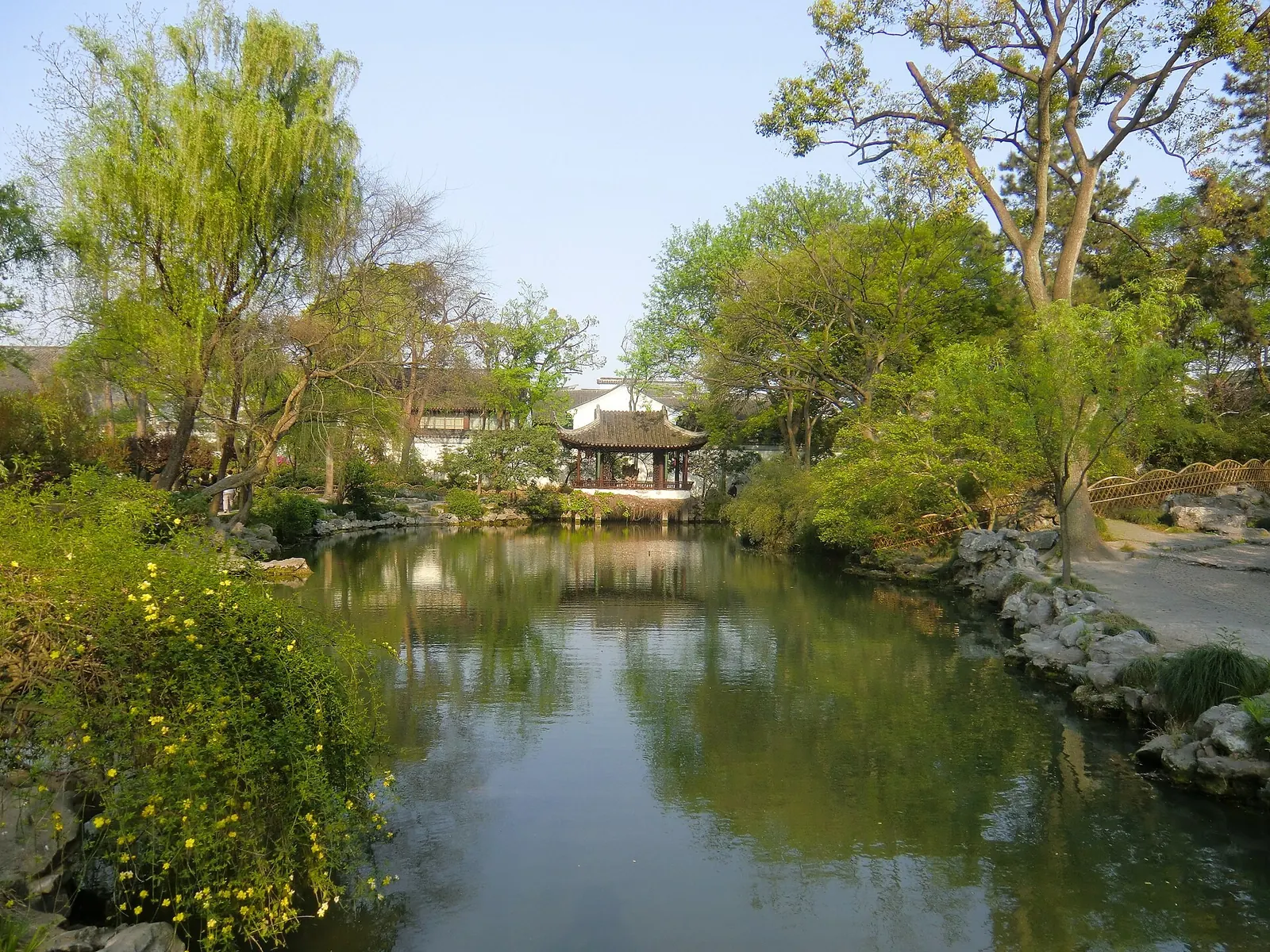
The great gardens
Suzhou alone has nine gardens on UNESCO's World Heritage list. These are the ones to start with.
 The Humble Administrator's GardenA guide to the Humble Administrator's Garden in Suzhou, the largest of the city's classical gardens: its history, its three parts, the best views and tips for visiting.
 The Lingering GardenA guide to the Lingering Garden in Suzhou: its history since the Ming dynasty, the Cloud-Capped Peak rock, the long corridor with its calligraphy and windows, and visiting tips.
 The Master of the Nets GardenA guide to the Master of the Nets Garden, the smallest and perhaps most perfect of Suzhou's classical gardens, its fisherman symbolism, its scale, and its copy in New York's Metropolitan Museum.
 The Lion Grove GardenA guide to the Lion Grove Garden in Suzhou, famous for its maze of Taihu limestone rocks: its Buddhist origins, the lion-shaped rocks, and tips for exploring the rockery.
 Yu Garden, ShanghaiA guide to Yu Garden in Shanghai's old town: its Ming-dynasty origins, the Exquisite Jade rock, the dragon walls, the zigzag bridge and the bazaar around it, with visiting tips.
 Ge Garden, YangzhouA guide to Ge Garden in Yangzhou, the salt merchant's garden famous for its bamboo and its four rockeries representing spring, summer, autumn and winter.
 The Summer Palace, BeijingA guide to the Summer Palace in Beijing, the great imperial garden: Kunming Lake and Longevity Hill, the Long Corridor, the Marble Boat, its history under Qianlong and Cixi, and visiting tips.
Understand what you see
 The elements of a Chinese gardenHow classical Chinese gardens are designed: rocks and water, buildings, framed views, borrowed scenery, moon gates and lattice windows, paths, and the link with poetry and painting.
 Plants and their meaningsThe plants of classical Chinese gardens and their meanings: plum, orchid, bamboo and chrysanthemum (the Four Gentlemen), pine, lotus, peony, osmanthus and willow, with seasons.
 Visiting the Suzhou gardensPractical tips for visiting Suzhou's classical gardens: getting there, tickets, which gardens to choose, the best time of day and year, and a two-day plan including canals and old streets.
 Chinese gardens outside ChinaAuthentic classical Chinese gardens built outside China, many by craftsmen from Suzhou: in Vancouver, Portland, New York, San Marino (California), Sydney, Dunedin, Montreal and elsewhere.Creating a Chinese-style garden at homeIdeas for bringing the principles of classical Chinese gardens to a small garden, courtyard or balcony: enclosure, rock and water, framed views, symbolic plants and simple materials.
Why "Manchun"?
Mǎn chūn yuán (满春园) means "garden full of spring". Spring is when plum and then peach blossom, peonies and fresh willow leaves bring the gardens to life, but the best gardens were designed to be enjoyed in every season: lotus in summer, osmanthus scent in autumn and plum blossom against snow in winter.